
This is where we look at the big picture of your book. Does your story actually work? Are there plot holes? Do chapters drag or rush? For fiction, we focus on structure, pacing, character arcs, and whether your narrative holds together. For non-fiction, we check if your arguments make sense, if chapters flow logically, and if you’re actually getting your point across. This type of editing happens early and usually means significant rewrites. It’s honest feedback about what’s working and what isn’t, before you waste time polishing sentences that might need to be cut entirely.
Line editing is about making your writing better at the sentence level. We tighten wordy passages, fix awkward phrasing, improve rhythm, and make sure your prose actually flows. This isn’t grammar police stuff, it’s about making your writing clearer, sharper, and more engaging. We keep your voice but help it come through stronger. If developmental editing fixes the bones of your book, line editing polishes the muscle and skin.
This is the grammar, spelling, punctuation, and consistency pass. We fix verb tenses, subject-verb agreement, run-on sentences, comma splices, all the technical stuff readers notice when it’s wrong. We also check for consistency: Did you call your character “grey-eyed” on page 10 and “blue-eyed” on page 150? Is it “towards” or “toward” throughout? Copy editing catches these things so your book looks professionally written, not self-published in a rush.
Proofreading is the final check before publication. Your book’s already been edited and formatted, now we’re just catching whatever slipped through. Typos, formatting glitches, weird spacing, missing punctuation. It’s the last safety net. Most authors are too close to their work by this point to spot these errors themselves, which is exactly why you need fresh eyes doing one final read-through.
If you’re publishing research, a thesis, or scholarly work, you need editors who understand academic standards. We check citations (APA, MLA, Chicago, whatever your field requires), verify references, ensure your argument meets academic rigour, and make sure your writing is clear without dumbing down complex ideas. Academic writing has specific rules, and we know them.
For instruction manuals, scientific writing, or anything requiring absolute accuracy in terminology and data, technical editing ensures clarity without sacrificing precision. We make sure your specialized content is understandable to your target audience while keeping technical details correct.








We publish books across major platforms, including Amazon KDP, IngramSpark and other global distributors. Whether you choose print, eBook or both, we guide you in selecting the right format and publishing route for your goals.

We provide developmental editing, line editing, copy editing and proofreading, depending on what your manuscript needs. Our editors improve structure, language and accuracy while keeping your tone and message intact.

We offer ghostwriting support across all genres, including fiction, non-fiction, autobiographies, business books, self-help, academic work and children’s stories. Our writers shape your ideas into clear, well-written manuscripts through structured collaboration.

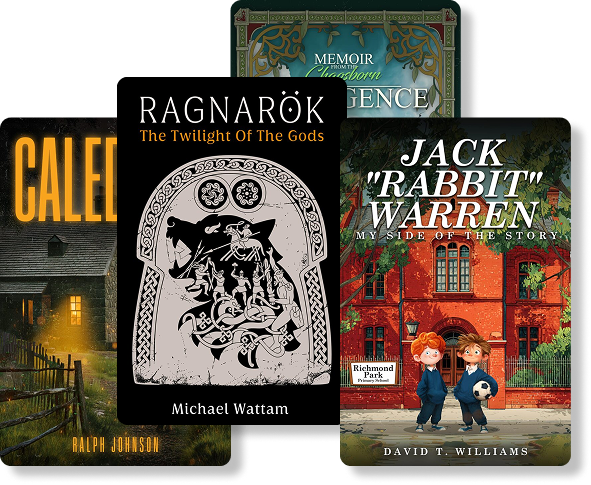
We design covers for fiction, non-fiction, academic books and children’s titles in both print and digital formats. From illustrated concepts to clean typographic styles, our designers create covers that suit your genre and audience.

We format books for novels, academic texts, children’s books and non-fiction titles. Our layouts are prepared for paperback, hardback and eBook versions, ensuring your content meets platform and printing requirements.

We help promote your book through launch planning, online listings, author branding and targeted campaigns. Our strategies focus on visibility across digital platforms while helping you reach the right readership for your genre.



Ireland Publishing House helped me turn my thoughts into a well-researched, well-organized non-fiction book. They made sure that the tone and structure matched what I had in mind, and the final product was great. The process was smooth and worked well with others, and I’m sure my book is ready to be published.
It was a pleasure to work with Ireland Publishing House to write my fiction book. Their team really got the heart of my story and made it come to life in a way I never would have thought possible. The end result was better than I had hoped for.

Ireland Publishing House made the book publishing process clear and manageable. Every step was explained thoroughly, allowing me to make informed decisions. Their organised approach and attention to quality gave me confidence that my book was being handled with care and professionalism.
I engaged Ireland Publishing House for ghostwriting services and found the experience highly professional. The team took time to understand my ideas and writing style, ensuring my voice was preserved. Communication was consistent throughout, and the final manuscript was clear, structured, and well written.

I had my non-fiction proofread by them really polished my book.
I had an amazing experience working with Ireland Publishing House for my book’s ghostwriting. Their team captured my voice perfectly and delivered a beautifully written manuscript. The process was smooth, and they kept me updated every step of the way. Highly recommend their professional service for any author!
I worked with this company for my book publishing and I am very happy with their service.
I partnered with Ireland Publishing House for my children’s book project and was very impressed. The illustrations and layout were engaging and age-appropriate. They delivered high-quality results while maintaining creative consistency. The final book exceeded my expectations.

We guide you through the publishing process in clear, simple steps, so you always know what is happening and what comes next. Your work is kept fully confidential, your feedback is taken seriously, and nothing moves forward without your approval. Our role is to remove confusion, protect your work, and make sure your book is completed properly and professionally.